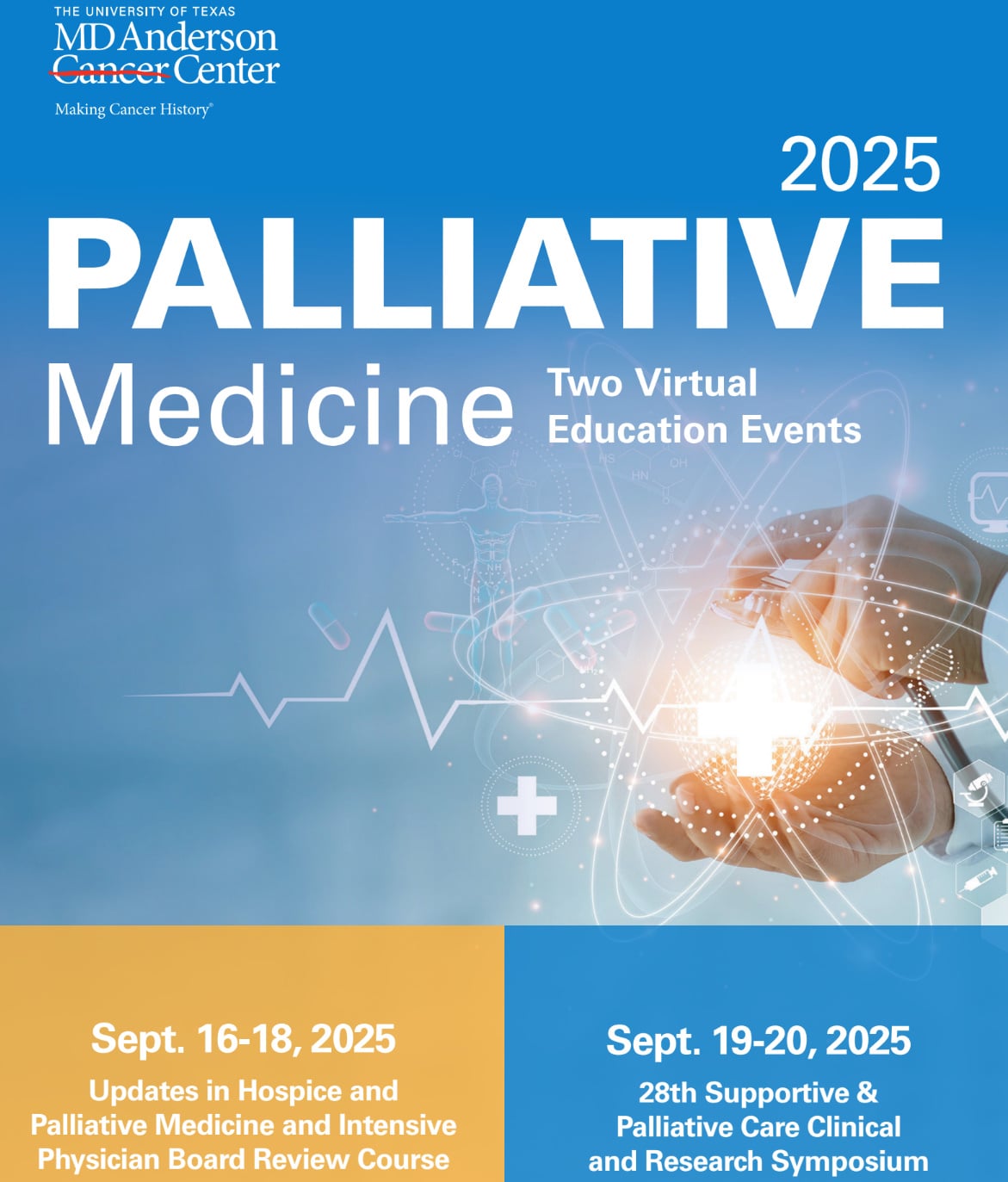
The University of Texas MD Anderson Cancer Center Updates in Hospice and Palliative Care and Intensive Physician Board Review 2025
Introduction
The University of Texas MD Anderson Cancer Center Updates in Hospice and Palliative Care and Intensive Physician Board Review 2025 is an advanced educational program dedicated to contemporary palliative medicine, hospice care, symptom management, and physician board preparation. Developed by The University of Texas MD Anderson Cancer Center, this intensive virtual course provides clinicians with a comprehensive review of modern hospice and palliative medicine through evidence-informed lectures, bedside-oriented clinical discussions, interdisciplinary perspectives, and board-focused educational sessions.
As serious illness care becomes increasingly integrated into oncology, intensive care, neurology, geriatrics, and chronic disease management, clinicians must develop expertise not only in symptom control, but also in communication, ethical decision-making, psychosocial care, prognostication, and interdisciplinary collaboration. This course addresses those challenges through a clinically practical curriculum focused on real-world patient care across advanced cancer, chronic organ failure, neurodegenerative disease, and other life-limiting illnesses.
Structured to support preparation for the ABIM Hospice and Palliative Medicine (HPM) board examination, the program combines high-yield board review with practical patient-centered education relevant to inpatient palliative care, outpatient supportive oncology, ICU consultation, hospice medicine, and longitudinal serious illness management.
Files Included
The MD Anderson Hospice and Palliative Care Board Review 2025 educational package includes comprehensive palliative medicine and hospice care learning materials optimized for self-paced professional education.
Included resources may consist of:
- Comprehensive hospice and palliative medicine curriculum
- Advanced symptom management lectures
- Board review-focused educational sessions
- ICU and end-of-life care discussions
- Ethical and legal decision-making reviews
- Communication and psychosocial care modules
- Supportive oncology educational content
- Evidence-informed pain management learning materials
These materials support board preparation, clinical education, and advanced interdisciplinary palliative care training.
Why This Course Is Important
Palliative medicine has become an increasingly essential component of modern healthcare as patients with cancer, chronic organ failure, neurologic disease, and multisystem illness live longer with complex symptom burdens and evolving treatment needs. Clinicians are now expected to manage difficult symptoms, facilitate emotionally complex conversations, address psychosocial suffering, navigate ethical dilemmas, and coordinate interdisciplinary care while maintaining patient dignity and quality of life.
At the same time, advances in oncology, intensive care, transplantation, immunotherapy, and chronic disease treatment have created new challenges involving symptom management, treatment toxicities, opioid stewardship, communication under uncertainty, and end-of-life decision-making.
The MD Anderson Updates in Hospice and Palliative Care and Intensive Physician Board Review 2025 addresses these realities through a highly practical educational framework emphasizing bedside management strategies, communication skills, ethical reasoning, interdisciplinary care coordination, and individualized symptom management approaches relevant to contemporary palliative medicine practice.
What Participants Will Learn
Participants completing this course will strengthen their understanding of hospice and palliative medicine, advanced symptom management, and serious illness communication strategies.
Learning objectives include:
- Applying advanced pain management and opioid stewardship principles
- Understanding opioid selection, titration, and opioid rotation strategies
- Managing complex symptoms including dyspnea, delirium, cachexia, fatigue, nausea, and bowel obstruction
- Facilitating goals-of-care discussions and advance care planning conversations
- Delivering difficult news and navigating prognostic uncertainty
- Applying ethical and legal frameworks in serious illness care
- Understanding ICU palliative medicine and end-of-life transitions in critical care settings
- Managing psychosocial distress, anxiety, depression, grief, and bereavement
- Understanding pediatric and geriatric palliative medicine considerations
- Reviewing supportive oncology and cancer treatment toxicity management
- Strengthening preparation for the ABIM Hospice and Palliative Medicine board examination
The curriculum integrates symptom management, communication, ethics, supportive oncology, hospice medicine, and interdisciplinary serious illness care into a comprehensive educational experience.
Full Course Topics & Lectures
Advanced Pain Management & Opioid Stewardship
Opioid Selection and Titration
Opioid Rotation
Adjuvant Analgesics
Interventional Pain Management
Opioid-Induced Neurotoxicity
Risk Mitigation Strategies
Non-Medical Opioid Use Concerns
Integrative Pain Management
Symptom Management Beyond Pain
Dyspnea Management
Cough Management
Fatigue in Advanced Illness
Delirium Management
Cachexia and Nutritional Challenges
Nausea and Vomiting
Constipation and Bowel Obstruction
Sleep Disturbance
Xerostomia
Pruritus
Communication & Serious Illness Conversations
Goals-of-Care Discussions
Prognostic Communication
Delivering Difficult News
Advance Care Planning
Family Conflict Resolution
End-of-Life Decision-Making
Ethical & Legal Decision-Making
Capacity Assessment
Surrogate Decision-Making
Withdrawal of Life-Sustaining Treatment
Ethical Dilemmas in Advanced Illness
Hospice Eligibility
Legal Considerations in End-of-Life Care
Medical Futility Discussions
ICU Palliative Medicine
Ventilator Weaning
ICU Symptom Management
Prognostication in Critical Illness
Family Communication in the ICU
End-of-Life Transitions in Intensive Care
ICU Escalation Decisions
Disease-Specific Palliative Care
Cardiac Disease Palliative Care
Renal Disease Palliative Care
Neurologic Disorder Symptom Management
AIDS/HIV-Related Serious Illness Care
Supportive Oncology Approaches
Pediatric & Geriatric Palliative Medicine
Pediatric Palliative Care
Geriatric Symptom Management
Developmental Considerations in Serious Illness
Age-Specific Communication Strategies
Psychosocial, Spiritual & Bereavement Care
Spiritual Care in Advanced Illness
Anxiety and Depression at End of Life
Grief and Bereavement Support
Burnout Prevention
Interdisciplinary Teamwork
Supportive Oncology & Cancer Treatment Toxicities
Chemotherapy Toxicity Management
Radiation Therapy Complications
Targeted Therapy Adverse Effects
Immunotherapy-Related Symptoms
Board Review & Examination Preparation
High-Yield Hospice and Palliative Medicine Concepts
Board Examination Strategies
Clinical Frameworks and Rapid Review
Case-Based Reasoning
How to Take the Exam
Educational Experience & Learning Features
The MD Anderson Hospice and Palliative Care Board Review 2025 combines advanced palliative medicine education with clinically practical symptom management and board-focused learning strategies.
Educational features include:
- Expert-led hospice and palliative medicine lectures
- Advanced pain management education
- ICU and end-of-life care discussions
- Communication and psychosocial care training
- Ethical and legal decision-making reviews
- Board review-focused educational sessions
- Interdisciplinary palliative care discussions
- Supportive oncology and symptom management education
- Case-based clinical reasoning and bedside management strategies
- Self-paced virtual learning flexibility
The curriculum integrates supportive care, hospice medicine, communication skills, ethics, symptom control, and interdisciplinary serious illness management into a clinically practical educational platform.
Who Should Take This Course
The MD Anderson Updates in Hospice and Palliative Care and Intensive Physician Board Review 2025 is intended for clinicians involved in serious illness care, supportive oncology, and palliative medicine.
This course is especially valuable for:
- Palliative care physicians
- Hospice medicine specialists
- Oncologists
- Hospitalists
- Intensivists
- Internal medicine physicians
- Geriatricians
- Advanced practice providers in palliative medicine
- Physicians preparing for the ABIM Hospice and Palliative Medicine board examination
- Clinicians involved in serious illness communication and end-of-life care
The curriculum is particularly relevant for healthcare professionals seeking advanced education in symptom management, hospice medicine, communication strategies, ethics, and interdisciplinary palliative care.
Clinical Applications & Practice Benefits
The course provides clinically relevant education focused on improving symptom management, serious illness communication, and interdisciplinary patient care.
Participants gain practical insight into:
- Complex pain management and opioid stewardship
- Dyspnea, delirium, nausea, fatigue, and cachexia management
- Goals-of-care conversations and prognostic communication
- ICU palliative care integration
- Ethical decision-making in advanced illness
- Supportive oncology and treatment toxicity management
- Psychosocial and spiritual care approaches
- Hospice eligibility and end-of-life transitions
- Interdisciplinary coordination in serious illness care
The educational content strengthens compassionate clinical reasoning while supporting improved patient-centered care and board certification preparedness.
Professional Summary
The University of Texas MD Anderson Cancer Center Updates in Hospice and Palliative Care and Intensive Physician Board Review 2025 from The University of Texas MD Anderson Cancer Center provides one of the most comprehensive educational reviews available in modern hospice and palliative medicine. Combining symptom management, communication strategies, ethics, ICU palliative care, supportive oncology, and board-focused learning, the program delivers a broad review of serious illness care through expert-led instruction and clinically practical discussion.
From opioid management and delirium to prognostic communication, ventilator withdrawal, psychosocial support, pediatric palliative medicine, and interdisciplinary hospice care, the curriculum explores the full spectrum of contemporary palliative medicine with strong emphasis on bedside relevance and compassionate clinical care.
Its integration of board preparation, symptom management education, ethical reasoning, and interdisciplinary serious illness care makes this course a valuable educational resource for palliative care physicians, oncologists, intensivists, hospitalists, and clinicians seeking advanced expertise in hospice and palliative medicine.
Topics
-
Adjuvants for Pain Management
-
Cachexia
-
Cancer Treatment Toxicities- Chemotherapy, Radiation Therapy, Targeted Therapy, and Immunotherapy – Sonal Admane, MD
-
Challenging Conversations in Palliative Care
-
Delirium, and Opioid-Induced Neurotoxicity
-
Disease Specific Palliative Care I- Cardiac and Renal
-
Disease Specific Palliative Care II- Neurological, AIDS
-
Dyspnea and Cough
-
Ethical and Legal Decision Making
-
Fatigue
-
Geriatric Palliative Care
-
Grief & Bereavement
-
ICU II; and Ventilator Weaning – Kevin Madden, MD
-
Integrative Approaches to Manage Pain – Larry Driver, MD
-
Interdisciplinary team, Professionalism, Quality Improvement, Compliance, and Burnout – Suresh Reddy, MD
-
Interventions for the Management of Cancer Pain
-
Lunch- Meet the Professor – 01
-
Lunch- Meet the Professor- Pain Management and Opioid Case Discussions
-
Lunch- Meet the Professor
-
Management of Anxiety-Depression at the End-of-Life
-
Medicare Hospice Benefit
-
Medication Interactions – Matthew Clark, PharmD
-
Nausea-Constipation-Bowel Obstruction
-
Opioid Rotation
-
Opioid Safety, Non-Medical Opioid Use, and Risk Mitigation Strategies – Joseph Arthur MD
-
Opioids for Pain Management
-
Pain- Assessment and Principles
-
Palliative Care Emergencies
-
Palliative Care in the ICU – Kevin Madden, MD
-
Palliative Care in the Last Week of Life
-
Pediatric Palliative Care II – Kevin Madden, MD
-
Pediatric Palliative Care
-
Prognostication
-
Sleep Disturbance – Sriram Yennu MD
-
Spiritual Care
-
Welcome Introduction and General Overview of Course- How to Take the Exam
-
Wound Care-Pressure — Ulcers-Pruritis-Xerostomia