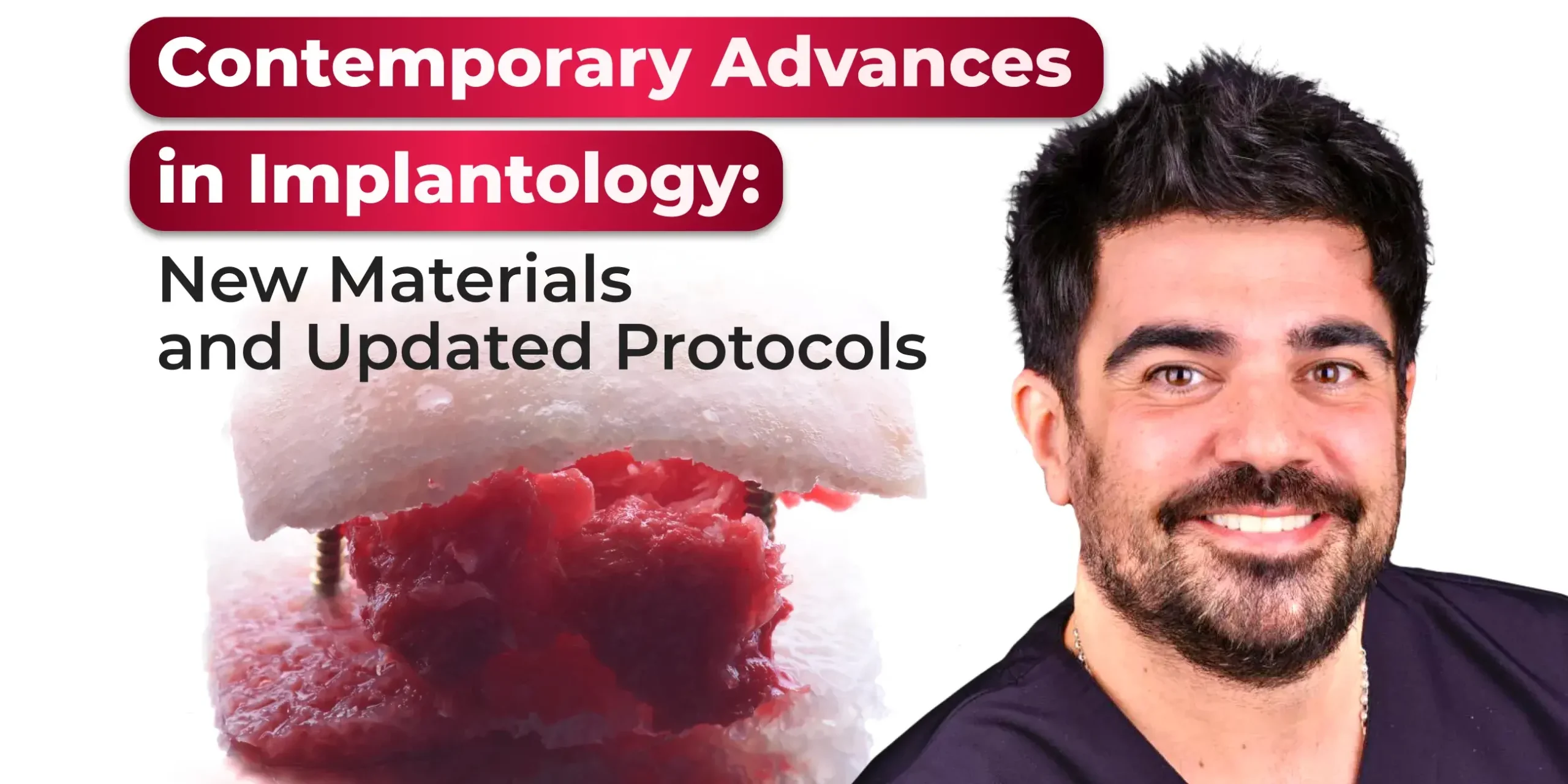
OHI-S Contemporary Advances in Implantology New Materials and Updated Protocols
$55,00
This Product is shared via google drive download link, So please share your correct Gmail id while placing the order .Please note that there are no CME points or certificate associated with this course Samples for Courses Can be found here : Free Samples Here!
Include: 6 videos + 6 audios + 6 file sub vtt, size: 2.62 GB
OHI-S Contemporary Advances in Implantology New Materials and Updated Protocols
Include: 6 videos + 6 audios + 6 file sub vtt, size: 2.62 GB
Target Audience: implantologists, oral and maxillofacial surgeons, general dentists
Information:
6 lessons (5h 33min)
ONLY the latest advancements and biomaterial innovations in implantology!
The most up-to-date course on implantology is now available with renowned lecturers from Spain and Italy!
Gain valuable insights and learn in detail about advanced implantology topics, including:
– Tissue level implants for aesthetic tissue rehabilitation
– Protocols of horizontal bone grafting
– Protocols of the split crest technique
– Clinical application of Porcine-Derived biomaterials for sinus augmentation and guided bone regeneration (GBR)
– Biconometric prosthetic concept and navigated implantology.
The OHI‑S Contemporary Advances in Implantology: New Materials and Updated Protocols course is best for oral surgeons, implantologists, prosthodontists, and general dentists who want structured, CE‑accredited training in the latest biomaterials and evidence‑based surgical/restorative protocols in implant dentistry. It is designed to update clinicians on cutting‑edge materials, techniques, and workflows that improve predictability, longevity, and patient outcomes.
👩⚕️ Who Should Enroll
- Oral & maxillofacial surgeons performing implant surgeries and bone augmentation procedures.
- Implantologists seeking mastery of new biomaterials and updated surgical/restorative protocols.
- Prosthodontists & restorative dentists integrating advanced implant solutions into functional and aesthetic rehabilitation.
- General dentists expanding their scope into implantology with modern, evidence‑based techniques.
- Dental technicians & lab professionals collaborating on implant prosthetics with new restorative materials.
- Residents, fellows, and trainees in oral surgery, prosthodontics, or implantology needing structured advanced training.
📚 What You’ll Learn
- New biomaterials: latest ceramics, titanium alloys, and regenerative materials for implant success.
- Updated surgical protocols: minimally invasive techniques, immediate placement, and guided surgery workflows.
- Restorative innovations: digital workflows for implant prosthetics, CAD/CAM integration, and full‑arch rehabilitation.
- Regenerative concepts: bone grafting, PRF, and biologically driven approaches for predictable osseointegration.
- Case‑based lessons: clinical examples demonstrating functional stability and aesthetic excellence.
Topics:
Lesson 1.Tissue Level Implants in Aesthetic Implant Dentistry: Strategies and Innovations
– Tissue level implants and their historical background
– Bone level vs. tissue level implants
– Hybrid implants:
– Advantages in treating the aesthetic zone
– Biological rationale behind the use of hybrid implants.
– Post-extractive alveolar bone resorption and its management
– Protocols for 3D placement of tissue level implants in the aesthetic zone
– Protocols for mini-invasive approaches in implant dentistry
– Post-extractive alveolar socket remodeling
– Analysis of clinical cases
– Management of different post-extractive alveolar sockets in various clinical cases.
Recommended for: Implantologists, Oral and maxillofacial surgeons, General dentists.
Lesson 2.Tissue Level Implants in Clinical Everyday Practice
– Protocols for 3D placement of tissue level implants in the aesthetic zone
– Protocols for mini-invasive approaches in implant dentistry
– Post-extractive alveolar socket remodeling
– Analysis of clinical cases:
– Management of different post-extractive alveolar sockets in various clinical cases.
Recommended for: Implantologists, Oral and maxillofacial surgeons, General dentists.
Lesson 3.Horizontal Bone Grafting: New Approaches to Avoid Complications
– Maxillary bone atrophy: Complex regeneration surgeries with high morbidity
– Protocols for the horizontal augmentation technique
– Step-by-step protocols for the split crest technique
– Predictable alternatives to the split crest technique
– Management of severe horizontal atrophy cases and management of long-term and short-term complications
– Analysis of clinical cases.
Recommended for: Implantologists, Oral and maxillofacial surgeons, General dentists.
Lesson 4.Horizontal Bone Grafting with Split Crest Technique
– Step-by-step protocols for the split crest technique
– Predictable alternatives to the split crest technique
– Clinical advantages of the split crest technique
– Rehabilitation options for cases with compromised bone volume
– Analysis of clinical cases.
Recommended for: Implantologists, Oral and maxillofacial surgeons, General dentists.
Lesson 5.Cone Morse Connections, Biconometric Prosthetic Concept, and Dynamic Navigation in Implantology
– Clinical advantages of Cone Morse implants and benefits of employing Biconometry in dental implant procedures
– Simplification of implant procedures with Cone Morse implants and Biconometry
– Analysis of common clinical challenges:
– Implant spacing and vertical implant placement
– Provisional restorations and immediate loading.
– Clinical application of navigation technology to enhance precision and ensure parallelism between implant placements
– Management of edentulous cases using Biconometry and Navigation with immediate loading protocols
– Clinical application of Navident system
– Integrated data analysis and AI assistance for simplified implant planning with Navident
– The use of caps for provisional and definitive Biconometry restorations
– Analysis of clinical cases:
– Application of navigation technology in partial and full edentulous cases
– Bone response to various prosthetic connections.
Recommended for: Implantologists, Oral and maxillofacial surgeons, General dentists.
Lesson 6.Maxillary Sinus Augmentation: Extreme Rehabilitation with Porcine-Derived Biomaterials
– Introduction to new implant macro morphologies designed to enhance primary stability, particularly in cases with limited vertical bone volume
– Innovations in implant dentistry: Zygomatic implants and complex surgical interventions
– Management of edentulous cases:
– Protocols of the biconometry approach
– Navigation techniques
– Immediate loading protocols.
– The role of porcine biomaterials in advanced surgical techniques for extreme rehabilitation
– Analysis of the osteoconductive and osteoinductive properties of porcine-derived biomaterials
– Porcine-derived materials in promoting new bone formation, tissue integration, and accelerating the healing process
– Implant stability quotient and implant insertion torque
– Impact of the implant apex on the sinus membrane
– Relationship between underpreparation and implant stability
– Application of porcine-derived materials for sinus augmentation
– Analysis of clinical cases: long-term results of sinus augmentation procedures after more than 20 years.
Recommended for: Implantologists, Oral and maxillofacial surgeons, General dentists.
Related products