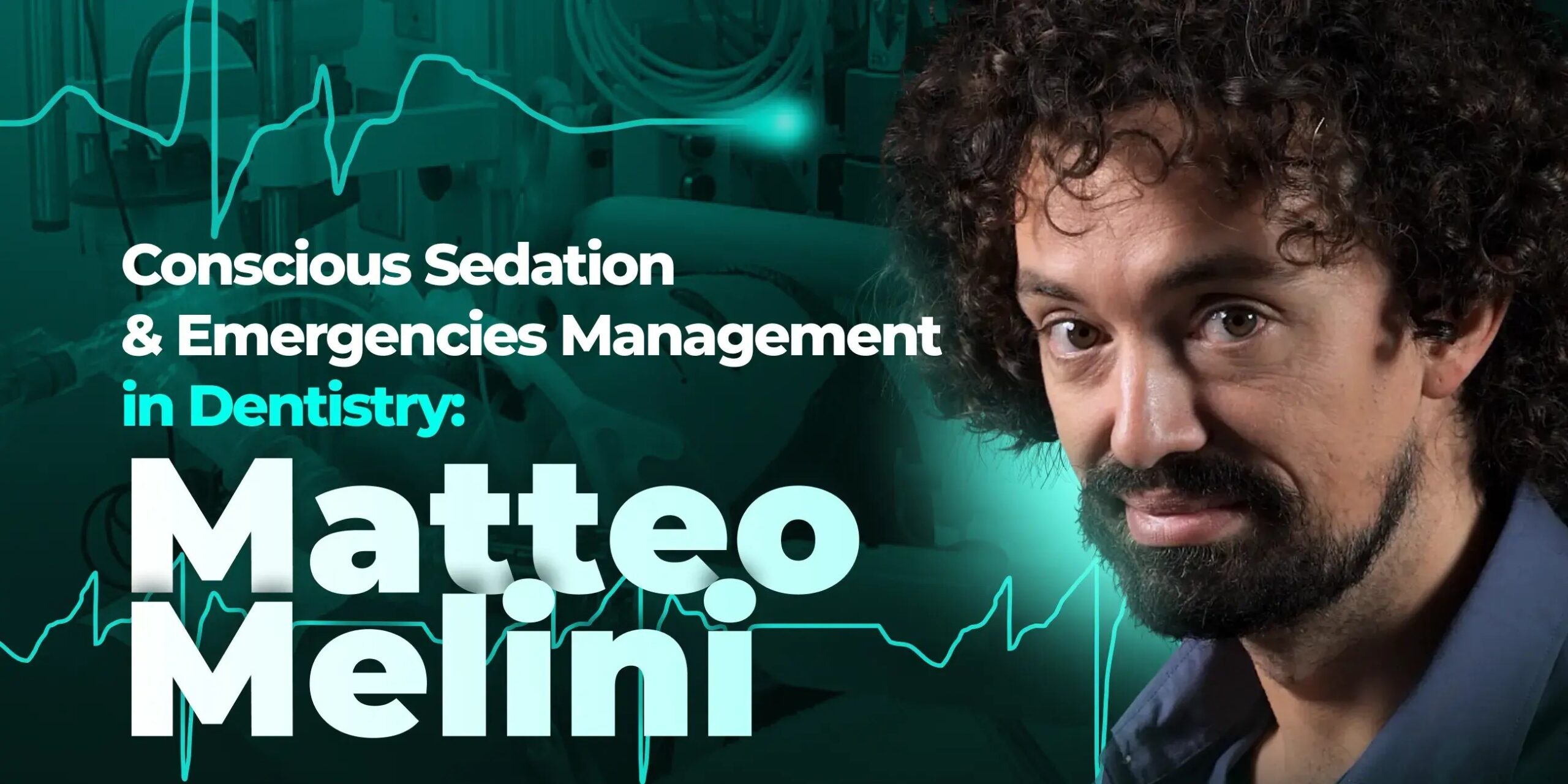
OHI-S Conscious Sedation & Emergencies Management in Dentistry Protocols for Safe Practice
$40,00
This Product is shared via google drive download link, So please share your correct Gmail id while placing the order .Please note that there are no CME points or certificate associated with this course Samples for Courses Can be found here : Free Samples Here!
Include: 6 videos + 6 audios + 6 file sub vtt, size: 2.15 GB
OHI-S Conscious Sedation & Emergencies Management in Dentistry Protocols for Safe Practice
Include: 6 videos + 6 audios + 6 file sub vtt, size: 2.15 GB
Target Audience: pediatric dentists, endodontists, restorative dentist, periodontists, implantologists, oral and maxillofacial surgeons, general dentists
Information:
6 lessons (4h 40min)
Conscious sedation and emergency management protocols – A complete guideline for safe dental practice!
Dental anxiety and emergencies are very common scenarios in everyday practice. During the course by Dr. Matteo Melini, a Counselor at the Italian Association of Conscious Sedation in Dentistry, you will learn in detail about:
– Physiology of anxiety among dental patients and how to manage it
– The concept of iatrosedation
– Protocols of inhalation conscious sedation
– Protocols of intravenous conscious sedation
– Protocols of management of the most common emergencies in dental practice.
This comprehensive course equips all dental professionals with a deep understanding of conscious sedation principles and emergency management, ensuring patient comfort and safety!
Join now and start treating your patients with confidence!
The OHI‑S Conscious Sedation & Emergencies Management in Dentistry: Protocols for Safe Practice course is best for dentists, oral surgeons, pediatric dentists, and dental teams who want structured, CE‑accredited training in safe sedation techniques and emergency preparedness in clinical practice. It emphasizes patient safety, evidence‑based sedation protocols, and effective management of medical emergencies in the dental office.
👩⚕️ Who Should Enroll
- General dentists performing procedures under conscious sedation who need standardized safety protocols.
- Oral & maxillofacial surgeons regularly using sedation in surgical dentistry.
- Pediatric dentists managing anxious or special‑needs children with sedation.
- Dental anesthesiologists & sedation providers refining emergency management skills.
- Dental hygienists & assistants supporting sedation procedures and emergency response.
- Residents, fellows, and trainees in dentistry or oral surgery seeking structured training in sedation and emergency protocols.
📚 What You’ll Learn
- Sedation pharmacology & safety: drug selection, dosing, monitoring, and contraindications.
- Protocols for conscious sedation: step‑by‑step workflows for safe administration.
- Emergency preparedness: recognition and management of medical emergencies (airway compromise, allergic reactions, cardiac events).
- Team training: roles of dentist, assistant, and staff in sedation and emergency response.
- Patient assessment: pre‑sedation evaluation, risk stratification, and informed consent.
- Case‑based lessons: real clinical scenarios demonstrating safe sedation and emergency management.
Topics:
Lesson 1.Physiology of Patient Anxiety in Dentistry
– Defining anxiety and dental anxiety
– Stress-related physical changes
– Intra-operative dental anxiety
– Stress related to emergencies in the dental chair
– Tips to improve the dentist-patient relationship
– Pharmacological and non-pharmacological products that can be used to reduce stress during dental appointments.
Recommended for: Pediatric dentists, Endodontists, Restorative dentist, Periodontists, Implantologists, Oral and maxillofacial surgeons, General dentists.
Lesson 2.Assessment Protocols for Determining Sedation Necessity
– Tips for determining the need for conscious sedation
– Indications of sedation needs (IOSN) by Prof. P Clouthard
– The three domains of IOSN
– Assessing medical history for sedation suitability
– Analyzing anxiety levels prior to sedation
– Modified dental anxiety scale
– Evaluating treatment complexity and sedation requirements.
Recommended for: Pediatric dentists, Endodontists, Restorative dentist, Periodontists, Implantologists, Oral and maxillofacial surgeons, General dentists.
Lesson 3.Non-pharmacological Interventions in Conscious Sedation
– Non-pharmacological interventions
– The concept of iatrosedation
– The therapeutic potential of hypnosis
– Utilizing music therapy for therapeutic benefit during dental appointments
– Exploring aromatherapy and biofeedback for conscious sedation.
Recommended for: Pediatric dentists, Endodontists, Restorative dentist, Periodontists, Implantologists, Oral and maxillofacial surgeons, General dentists.
Lesson 4.Inhalation Conscious Sedation: Comprehensive Protocols and Practices
– Historical perspectives on the clinical application of inhaled sedation
– Indications and contraindications for the clinical use of inhaled sedation
– Nitrous oxide and oxygen sedation: key features and properties
– The clinical indications for nitrous oxide/oxygen sedation
– Set-up of sedation machine
– Sedation signs and symptoms
– Integrated inhaled conscious sedation approach.
Recommended for: Pediatric dentists, Endodontists, Restorative dentist, Periodontists, Implantologists, Oral and maxillofacial surgeons, General dentists.
Lesson 5.Intravenous Conscious Sedation in Clinical Dental Practice
– Advantages and disadvantages of intravenous conscious sedation in clinical dental practice
– Indications and contraindications of intravenous conscious sedation in clinical dental practice
– Clinical and instrumental monitoring during intravenous conscious sedation
– Drugs for safe intravenous conscious sedation: Benzodiazepines, Midazolam, Diazepam
– Physical and physiological evaluation of the patient before, during, and after intravenous conscious sedation
– Complications and protocols for their management.
Recommended for: Pediatric dentists, Endodontists, Restorative dentist, Periodontists, Implantologists, Oral and maxillofacial surgeons, General dentists.
Lesson 6.Emergencies in the Dental Office and Management Protocols
– Protocols for the management of loss of consciousness during operations
– Protocols for working with diabetic patients
– Protocols for the management of hypersensitivity emergencies
– Protocols for management of epileptic seizure
– Protocols for management of cardiac arrest, asthma, and hyperventilation
– Protocols for management of suffocation, acute adrenal crisis, and stroke
– Protocols for management of emergencies from local anesthesia
– Emergencies due to the lack of hemostasis.
Recommended for: Pediatric dentists, Endodontists, Restorative dentist, Periodontists, Implantologists, Oral and maxillofacial surgeons, General dentists.
Related products



PULMONARY /RESPIRATORY
Chestnet Pediatric Pulmonary Board Review On Demand 2022 ( VIDEOS)