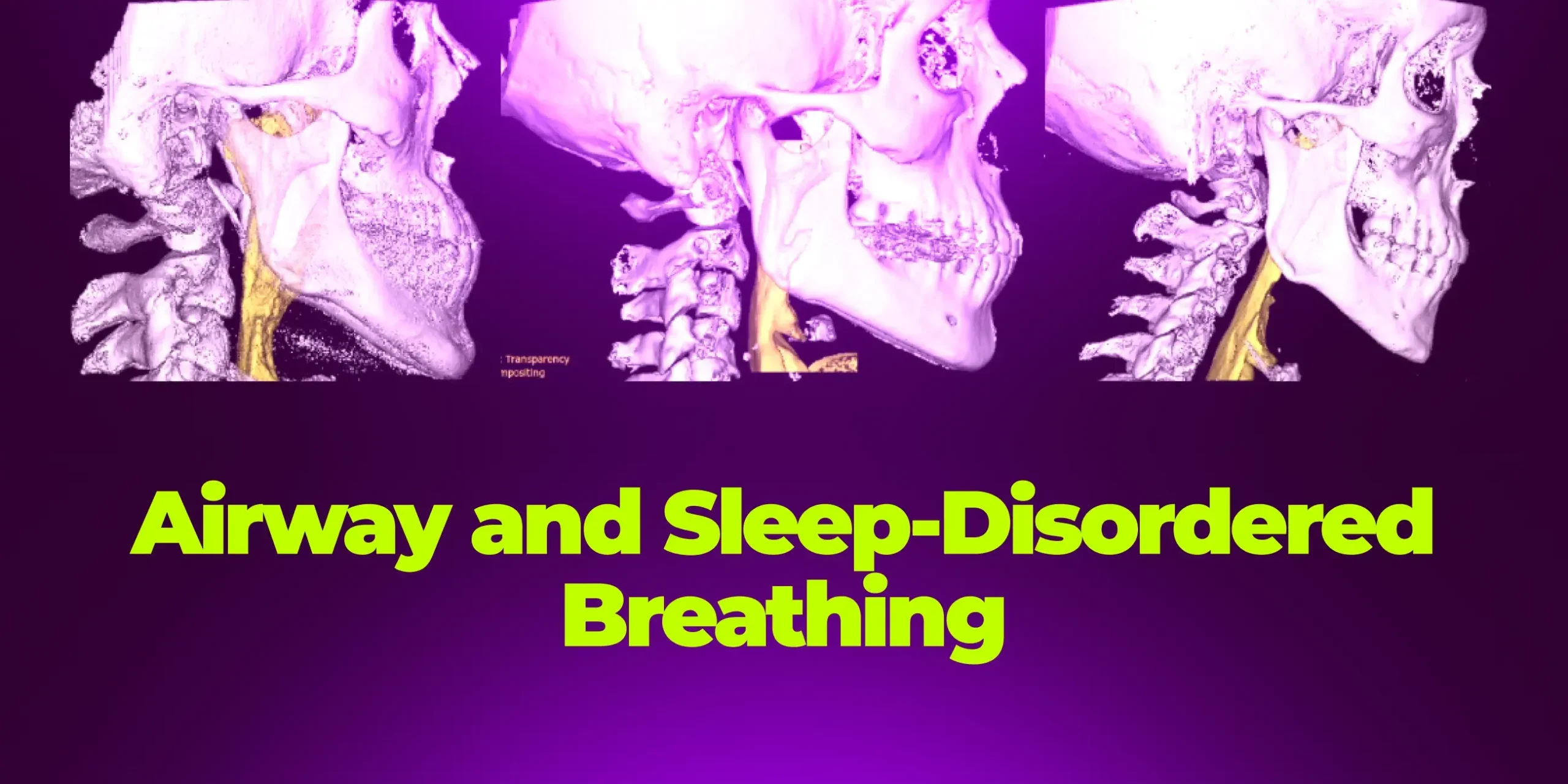
OHI-S Airway and Sleep-Disordered Breathing Integrating Myofunctional Protocols
$50,00
This Product is shared via google drive download link, So please share your correct Gmail id while placing the order .Please note that there are no CME points or certificate associated with this course Samples for Courses Can be found here : Free Samples Here!
Include: 4 videos + 4 audios + 4 file sub vtt, size: 2.55 GB
OHI-S Airway and Sleep-Disordered Breathing Integrating Myofunctional Protocols
Include: 4 videos + 4 audios + 4 file sub vtt, size: 2.55 GB
Target Audience: functional dentists, pediatric dentists, general dentists
Information:
4 lessons (4h 45min)
Myofunctional protocols developed for the management of airway and sleep-disordered breathing!
Explore the relationship between temporomandibular disorders (TMD), airway function, and the body’s balance, providing a holistic view of how these elements interconnect. This comprehensive course is designed to equip dental professionals with the knowledge and skills to address the overall health of patients.
During this course, you will learn in detail about:
– The impact of mouth breathing on children’s growth and development
– The impact of TMD and airway and sleep-disordered breathing on the body’s balance
– Myofunctional protocols to treat sleep apnea, dysautonomia, and the crooked face epidemic.
The OHI‑S Airway and Sleep‑Disordered Breathing: Integrating Myofunctional Protocols course is best for dentists, orthodontists, pediatric dentists, and allied health professionals who want structured, CE‑accredited training in diagnosing and managing airway and sleep‑related disorders using myofunctional therapy. It emphasizes interdisciplinary collaboration and evidence‑based protocols to improve breathing, sleep quality, and overall oral health.
Who Should Enroll
- Orthodontists incorporating airway and myofunctional considerations into orthodontic treatment planning.
- General dentists & prosthodontists managing patients with sleep‑disordered breathing and occlusal dysfunction.
- Pediatric dentists addressing early airway and breathing issues in children.
- Dental hygienists & myofunctional therapists supporting therapy protocols for airway health.
- Oral & maxillofacial surgeons coordinating surgical interventions with functional rehabilitation.
- Residents, fellows, and trainees in orthodontics, pediatric dentistry, or sleep medicine seeking structured training.
What You’ll Learn
- Airway assessment protocols: clinical and imaging methods for identifying sleep‑disordered breathing.
- Myofunctional therapy integration: exercises and protocols to improve tongue posture, breathing, and swallowing.
- Interdisciplinary collaboration: working with sleep physicians, ENT specialists, and therapists.
- Functional orthodontics: aligning orthodontic treatment with airway health.
- Case‑based lessons: real patient examples showing improved breathing, sleep, and functional stability.
Topics:
Lesson 1.Compensation Patterns in Early Airway Disorders
– Overview of the ADA’s 2017 proposal
– The importance of airway screening in dental practice
– Key signs of sleep-related breathing issues in children
– Screening techniques to detect early airway disorders
– The role of the tongue in overall oral health
– Impact of tongue function on sleep and breathing
– Overview of parasomnias associated with airway issues
– Strategies for diagnosing and managing these sleep disorders
– Techniques to improve tongue posture and function
– Practical exercises and interventions to guide tongue development.
Recommended for: Functional dentists, Pediatric dentists, General dentists.
Lesson 2.The Impact of Mouth Breathing on Children’s Growth and Development
– The role of the nose in filtering, humidifying, and regulating air
– Functional mechanics of breathing in children
– Difference between nasal and mouth breathing
– The reasons why children may start mouth breathing
– Long-term consequences of undiagnosed mouth breathing
– The impact of mouth breathing on craniofacial development
– The connection between mouth breathing and sleep disturbances
– The link between mouth breathing, allergies, and asthma.
Recommended for: Functional dentists, Pediatric dentists, General dentists.
Lesson 3.Exploring TMD, Airway, and the Body Balance
– A comprehensive exploration of what constitutes TMD disorder in relation to:
– Airway
– TMJ orthopedics
– Breathing function
– Body posture.
– The rule of 3 B: breathing, balance, brain
– The concept of forces and reflexes that control the position of the mandible
– Body posture and its role in mandibular functions
– Examination of the effect of the neck on mandibular function
– The relationship between nasal breathing and mandibular position
– TMD as a whole-body disorder and not an isolated dysfunction.
Recommended for: Functional dentists, Pediatric dentists, General dentists.
Lesson 4.Sleep Apnea, Dysautonomia and Crooked Face Epidemic
– Distinction between breathing and respiration
– Relationship between occlusal patterns, facial features, and postural distortion
– Orthopedic and physiological compensations resulting from misaligned skull bones and concurrent postural distortions
– Reciprocal Tension Membrane and its correlation with orthopedic alignment and physiology
– Facial distortion in relation to dysfunctional breathing
– Craniofacial distortions as indicators of the body’s survival mechanisms and their impact on growth potential.
Related products