Keratopigmentation Organization, Lab, Outcomes & Research Kolor Congress 2024
Include: 45 videos, size: 37.7 GB
Target Audience: corneal & refractive surgeons, ophthalmologists
Information:
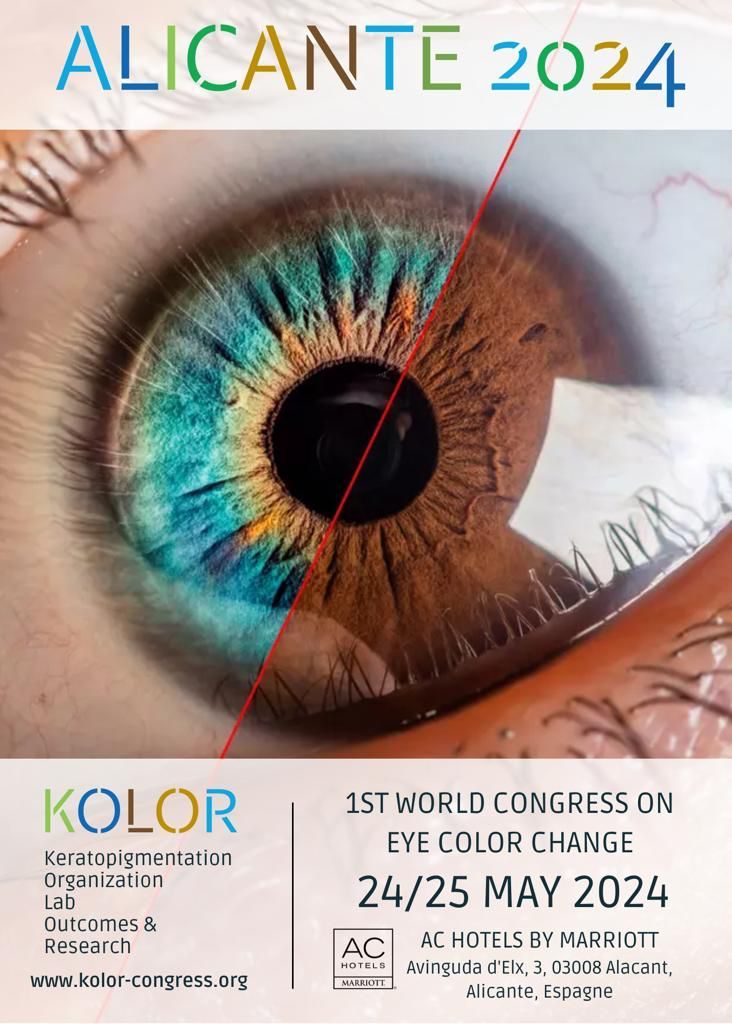
The KOLOR Congress 2024 was the 1st World Congress on Eye Color Change, marking the formal establishment of keratopigmentation as a distinct scientific and clinical discipline. Organized under the banner of K.O.L.O.R., this event brought together global experts to standardize the practice of changing eye color for both therapeutic (reconstructive) and aesthetic purposes.
The congress focused on moving the field away from high-risk procedures (like iris implants) toward safer, corneal-based techniques using femtosecond lasers. It served as the launchpad for the Keratopigmentation International Society (KIS), aiming to set ethical and clinical guidelines for practitioners worldwide.
2. What You Will Learn
Attendees were provided with a comprehensive education on the “FLAAK” (Femtosecond Laser-Assisted Annular Keratopigmentation) technique and its variations. Key learning points included:
-
Surgical Techniques: Mastering the creation of intracorneal tunnels using femtosecond lasers (VisuMax, Ziemer, etc.) for precise pigment delivery.
-
Pigment Science: Understanding the biocompatibility, stability, and safety profiles of medical-grade pigments (e.g., BioChromaEyes) versus non-medical inks.
-
Patient Selection: Criteria for identifying suitable candidates and, critically, screening out patients with unrealistic expectations or body dysmorphic traits.
-
Complication Management: How to handle issues like light sensitivity, pigment migration, or color fading.
3. Event Details
-
Event: 1st World Congress on Eye Color Change (KOLOR 2024)
-
Dates: May 24–25, 2024
-
Location: Alicante, Spain
4. Who Should Attend
This congress is tailored for ophthalmic professionals interested in expanding into the cosmetic and reconstructive sector:
-
Corneal & Refractive Surgeons: Looking to add a high-demand aesthetic procedure to their premium offering.
-
Ophthalmologists: Specializing in anterior segment reconstruction (treating aniridia, iris coloboma, or traumatic iris defects).
-
Researchers: Investigating corneal biocompatibility and pigment toxicology.
5. Why Attend
-
Pioneering Status: As the first event of its kind, attending allows physicians to be early adopters in a rapidly growing aesthetic market (similar to the early days of LASIK).
-
Safety First: The congress explicitly addressed the dangers of alternative methods (like iris depigmentation or implants) and positioned keratopigmentation as the safer alternative.
Topics:
👁️ Fundamentals of Keratopigmentation
-
Introduction to Corneal Coloring: The emergence of a new era in cosmetic corneal surgery and the difference between KTP and other eye color change methods.
-
Color Science & Psychology: Understanding the biological significance of eye color in nature and the psychological/ethical perspectives of changing eye color.
-
Pigment Selection: Guidelines for choosing the most adequate pigments and understanding their biocompatibility.
-
Preoperative Evaluation: Clinical and para-clinical protocols for therapeutic and pure cosmetic candidates.
⚡ Surgical Techniques & Technology
-
Femtosecond Laser-Assisted Keratopigmentation (FLAAK): Detailed techniques, outcomes for cosmetic purposes, and statistical analysis of over 500 cases.
-
Manual & Superficial Techniques: Approaches for reconstruction on broken eyes and superficial corneal staining.
-
Micropuncture Techniques: Alternative methods for aesthetic treatment in eviscerated eyes and anterior corneal stroma modification.
-
Combined Techniques: Integrating KTP with Intraconical Hyaluronic Acid Gel Filling or Strabismus surgery to restore cosmesis in complex cases.
🏥 Therapeutic Indications & Outcomes
-
Functional Restoration: Managing corneal scarring, leucomas, and photophobia through therapeutic pigmentation.
-
Long-Term Outcomes: Analysis of cosmetic and functional results in over 300 therapeutic cases.
-
Reconstructive Surgery: Solutions for phthisical and enophthalmic eyes.
-
Quality of Life: Assessing the impact of KTP on patient psychology and satisfaction.
⚠️ Complications, Safety & Management
-
Risk Assessment: Absolute and relative contraindications (e.g., Glaucoma).
-
Complication Management: Handling loss of suction, pigment fading, and endothelial cell loss.
-
Corneal Health: Studies on Dry Eye Disease (DED) and potential Corneal Ectasia post-surgery.
-
Future Surgical Implications: Does KTP limit future ocular surgeries or retinal exploration?
🩺 Advanced Case Studies & Special Scenarios
-
Post-Refractive Surgery: Performing FLAAK in patients with previous LASIK or PRK.
-
Cataract & Pseudophakia: Managing cataract surgery in patients with existing Keratopigmentation.
-
Corneal Transplants: Therapeutic KTP in cases of previous Penetrating Keratoplasty.
-
Revision Surgery: Managing color dissatisfaction and converting from Laser Iris Depigmentation to FLAAK.