Harvard Neurological Emergencies 2024 (Videos+PDF )
$70.00
This Product is shared via google drive download link, So please share your correct Gmail id while placing the order .Please note that there are no CME points or certificate associated with this course Samples for Courses Can be found here : Free Samples Here!
72 MP4 + 99 PDF Files 31.7 GB
Guaranteed Safe Checkout
⚙️ 24/7 support available
🔒 Payments are encrypted and 100% secure
Harvard Neurological Emergencies 2024 (Videos+PDF )
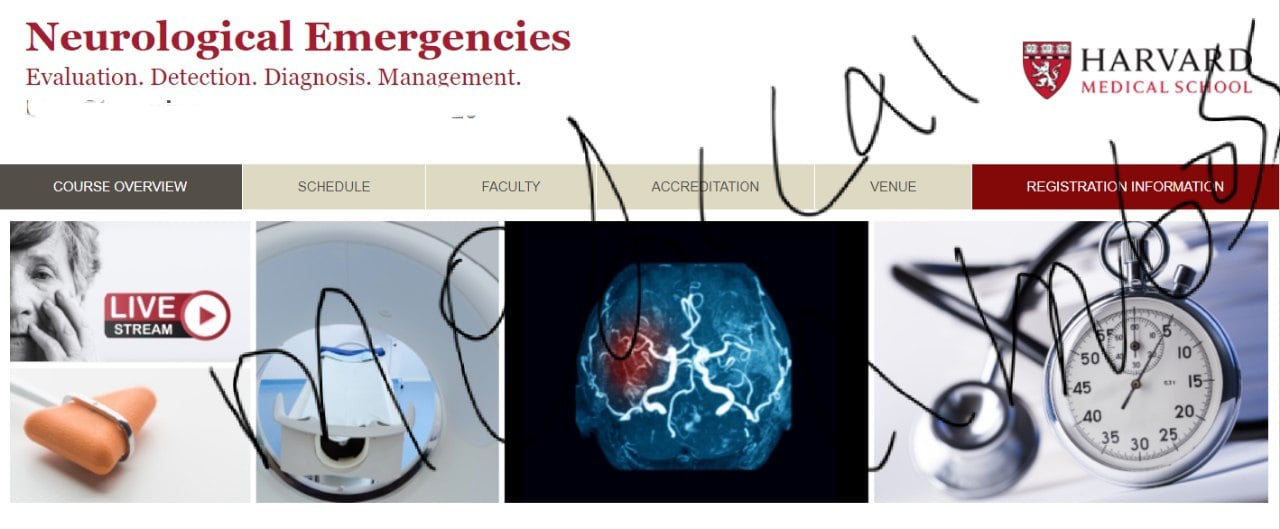
Evaluation. Detection. Diagnosis. Management.
In Emergency, Outpatient, And Inpatient Settings
Neurological Emergencies will be held online this year, using live streaming, electronic Q&A, and other remote learning technologies.
OVERVIEW
This special program provides new strategies, updates, best practices, and practical tips for:
- The WORKUP of common neurological complaints and high-risk conditions
- RAPID DETECTION of a neurological emergency and EARLY ACTIONS to optimize patient outcomes in emergency department, outpatient, and inpatient settings
- STATE-OF-THE-ART DIAGNOSIS And MANAGEMENT Of HIGH-RISK NEUROLOGICAL CONDITIONS:
- Ischemic Stroke
- TIA
- Carotid stenosis
- Intracerebral hemorrhage
- Traumatic brain injury
- Cerebral aneurysm
- Spinal cord compression
- Cauda equina syndrome
- RCVS
- Cerebral venous sinus thrombosis
- Seizu
- schedule Harvard CME _ Neurological Emergencies
YOU CAN CUSTOMIZE YOUR LEARNING EXPERIENCE for EMERGENCY, OUTPATIENT, or INPATIENT CARE
Key Topics Included
- Vascular Neurology: 2024 updates on Cerebral Aneurysms, IV Thrombolytics for Acute Stroke, and Reversible Cerebral Vasoconstriction Syndrome (RCVS).
- High-Frequency Symptoms: Algorithmic workups for Headache, Back Pain, Dizziness, and Syncope.
- Advanced Diagnostics: Deep dives into Neuroimaging (CT/CTA/MRI) and Point-of-Care Ultrasound (POCUS) for brain and eye emergencies.
- Specialized Tracks: Dedicated sessions on Pediatric SE, Geriatric Delirium, and Functional Neurological Disorders.
Core Product Features
- Expert-Led Content: Direct instruction from Harvard Medical School faculty and specialists from Beth Israel Deaconess Medical Center and Massachusetts General Hospital.
- Evidence-Based Algorithms: Access the latest diagnostic paradigms for high-risk conditions, including “cannot miss” headache causes and a new approach to dizziness that prioritizes physical exam over imaging.
- Video-Rich Learning: Includes clinical video clips of real patients to demonstrate hard-to-describe physical findings like nystagmus and the head impulse test.
- Comprehensive Coverage: 16 hours of high-impact updates on acute stroke, TIA, ICH, seizures, TBI, and spinal cord emergencies.
Related products

Critical Care - Emergency medicine
ASN Critical Care Nephrology – 2022 Update (On-Demand and Livestream)
$55.00