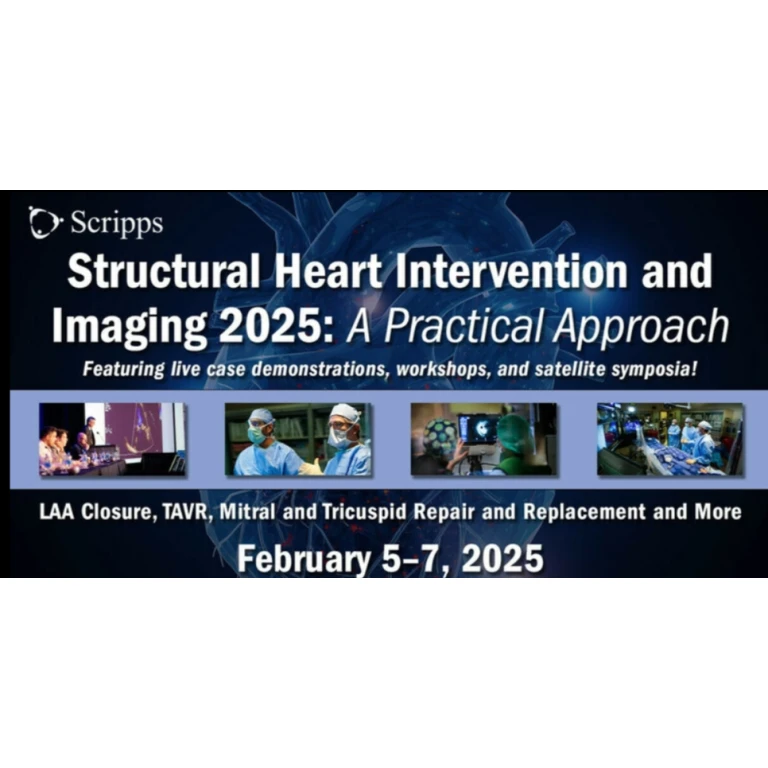
Scripps 14th Annual Structural Heart Intervention and Imaging 2025
Include: 30 videos + 24 pdfs, size: 24.96 GB
Target Audience: interventional cardiologists, cardiac surgeons, imaging specialists, fellows
Information:
Structural Heart Intervention and Imaging 2025: A Practical Approach
February 5–7, 2025 Hyatt Regency La Jolla at Aventine • San Diego, California
Conference Overview
The annual Scripps Structural Heart Intervention and Imaging conference is designed to provide a practical, cutting-edge, and live case-based assessment of structural heart disease interventions and cardiovascular imaging. The course will place a strong emphasis on the collaborative nature of these procedures across many disciplines within cardiology. Expert faculty will include interventionists, invasive cardiologists, echocardiologists, electrophysiologists, cardiothoracic surgeons, cardiac anesthesiologists, and sonographers. Faculty will discuss clinical guidelines on patient selection, pre-procedural assessment, procedural tips, techniques, and challenges (including concurrent imaging) during the performance of the procedures and conclude with assessment of outcomes and future directions.
Educational Objectives
After attending this live activity, participants should be able to:
• Build and optimize a multidisciplinary team of health care professionals to ensure appropriate management of patients with structural heart disease.
• Identify the equipment and imaging technologies necessary to perform structural heart disease interventions.
• Apply a comprehensive approach to the assessment of the aortic, mitral, and tricuspid valves, the interatrial septum, and the left and right ventricles, using echocardiography (TTE, TEE, and ICE), CT, and MRI for the purpose of the interventional treatment of these cardiac structures.
• Outline the current indications for LAA closure, PFO closure, transcatheter aortic valve replacement (TAVR), transcatheter mitral valve replacement (TMVR), and mitral transcatheter edge to edge repair (TEER).
• Evaluate echocardiographic and CT imaging before and after LAA closure, and identify and measure peri-device leaks, device-related thrombus, and other potential complications.
• Identify appropriate treatment strategies for patients with mitral valve disease (i.e., TEER or TMVR) or tricuspid valve disease (i.e., TEER or TTVR) based upon imaging findings.
• Incorporate live TEE multiplanar imaging to optimize transcatheter mitral and tricuspid valve intervention.
• Apply 2D and 4D ICE during structural heart intervention.
• Recognize the risk of left ventricular outflow tract obstruction after TMVR and coronary occlusion after TAVR and apply specific interventional strategies to prevent them (e.g., LAMPOON and BASILICA).
• Integrate emerging data regarding surgical risk, including low and intermediate-risk patients into TAVR decision-making.
• Recognize heart failure patients who might benefit from novel interventional strategies, such as interatrial shunt devices, to improve symptoms.
• Optimize the anesthetic management of patients with reduced ejection fraction undergoing TEER or TMVR.
• Employ best practices to safely manage potential complications of catheter-based therapies for structural heart disease.
The Scripps 14th Annual Structural Heart Intervention and Imaging 2025 is best for interventional cardiologists, cardiac surgeons, imaging specialists, fellows, and allied health professionals who want comprehensive, CME‑accredited updates on structural heart disease therapies and imaging innovations.
Who Should Attend
- Interventional cardiologists performing TAVR, MitraClip, left atrial appendage closure, and other structural interventions.
- Cardiac surgeons collaborating in hybrid procedures and advanced valve repair/replacement.
- Cardiac imaging specialists (echo, CT, MRI) who guide structural interventions.
- Fellows and residents in cardiology or cardiothoracic surgery preparing for subspecialty practice.
- Nurses, physician assistants, and cath lab technologists supporting structural heart programs.
What You’ll Learn
- Latest device technologies for transcatheter valve therapies and structural interventions.
- Advanced imaging techniques (TEE, CT, MRI) for patient selection, procedural planning, and outcomes assessment.
- Case‑based discussions highlighting complex interventions and complication management.
- Guideline updates and evidence‑based practice recommendations.
- Future directions in structural heart disease treatment, including investigational devices and imaging modalities.