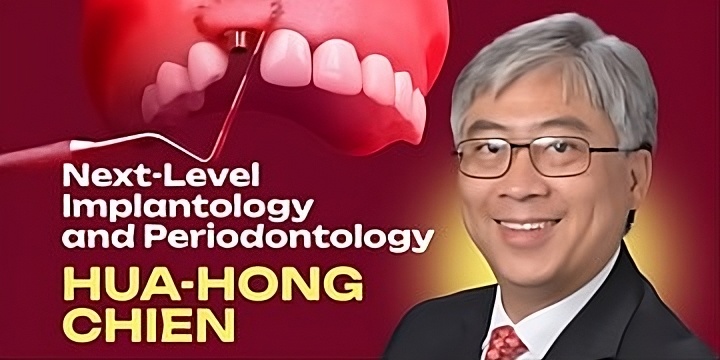
OHI-S Next-Level Implantology and Periodontology Mastering Immediate Implantation, Peri-implant Soft Tissue Augmentation, Sinus Lifting
$75,00
This Product is shared via google drive download link, So please share your correct Gmail id while placing the order .Please note that there are no CME points or certificate associated with this course Samples for Courses Can be found here : Free Samples Here!
Include: 6 videos, size: GB
OHI-S Next-Level Implantology and Periodontology Mastering Immediate Implantation, Peri-implant Soft Tissue Augmentation, Sinus Lifting
Include: 6 videos, size: GB
Target Audience: implantologists, periodontists, oral surgeons, prosthodontists, and advanced general dentist
Information:
5 lessons + 1 free (3h 52min)
Dive into the art and science of modern implant dentistry and periodontology — master minimally invasive extractions, immediate implant placement, soft tissue management, and sinus lifting using techniques that ensure flawless esthetics, predictable function, and long-lasting results.
Each lesson combines evidence-based protocols, clinical case demonstrations, and practical guidance.
During the course, you will learn about:
– Immediate implant placement and provisionalization protocols
– Surgical techniques for soft tissue volume augmentation around dental implants
– Step-by-step protocols for predictable sinus grafting, including prevention and management of surgical complications
The OHI‑S Next‑Level Implantology and Periodontology: Mastering Immediate Implantation, Peri‑implant Soft Tissue Augmentation, Sinus Lifting course is best for implantologists, periodontists, oral surgeons, prosthodontists, and advanced general dentists who want to refine their surgical skills and clinical decision‑making in complex implant and soft tissue procedures.
👩⚕️ Who Should Attend
- Periodontists and oral surgeons performing advanced implant and soft tissue surgeries.
- Implantologists and prosthodontists seeking mastery of immediate implantation and peri‑implant tissue management.
- General dentists with advanced training in implantology who want to expand their surgical repertoire.
- Residents and postgraduate trainees in periodontology, oral surgery, or prosthodontics.
- Dental technicians and lab professionals interested in understanding surgical principles that affect prosthetic outcomes.
📚 What You’ll Learn
- Immediate implantation techniques: clinical protocols, case selection, and complication management.
- Peri‑implant soft tissue augmentation: grafting methods, flap design, and aesthetic optimization.
- Sinus lifting procedures: lateral and crestal approaches, biomaterials, and risk reduction.
- Treatment planning principles: integrating surgical and prosthetic considerations for long‑term success.
- Case‑based learning: real‑world examples highlighting challenges and solutions.
📅 Course Details
- Organizer: OHI‑S (Online Dental Education Platform)
- Format: Online course with structured modules and expert lectures
- Faculty: Internationally recognized implantology and periodontology specialists
Topics:
Lesson 1.Minimally Invasive Tooth Extraction and Biological Principles in Immediate Implant Placement
– Overview of minimally invasive tooth extraction and immediate implant placement
– Timing and classification of implant placement: immediate, recent, delayed, and mature stages
– Biological and anatomical considerations influencing treatment choice
– Challenges of immediate implant placement, including:
– Alveolar bone remodeling
– Implant angulation discrepancies
– Soft tissue management difficulties
– Flap closure limitations
– Criteria for immediate placement and provisionalization:
– Primary stability
– Absence of infection
– Soft tissue biotype
– Patient compliance and esthetic expectations.
Lesson 2.Immediate Implant Placement and Provisionalization
— Digital workflow integration in implant dentistry
— Implant planning software and guided surgery concepts
— CAD/CAM and 3D printing technologies for:
– Customized healing abutments
– Provisional restorations
– Soft tissue contouring and emergence profile optimization.
— Clinical case demonstrations:
– Immediate implant placement
– In-house 3D printing provisional crown
– Soft tissue healing outcomes
– Crestal bone stability
– Long-term esthetic and functional success.
Lesson 3.Soft Tissue Volume Augmentation Around Dental Implants
– Biological role of peri-implant soft tissues in long-term implant success
– Importance of keratinized mucosa and soft tissue thickness
– Establishment and maintenance of a stable biologic width
– Common peri-implant soft tissue deficiencies:
– Insufficient keratinized mucosa (KM)
– Inadequate tissue thickness
– Peri-implant mucosal recession.
– Threshold values for long-term stability
– Indications and case selection for soft tissue volume augmentation.
Lesson 4.Surgical Techniques, Materials, and Clinical Outcomes of Peri-Implant Soft Tissue Augmentation
– Connective tissue graft (CTG) techniques:
– Tunnel approach
– Apical pouch technique
– Envelope technique.
– CTG as the gold standard for soft tissue volume augmentation
– Soft tissue substitute grafts:
– Xenografts
– Allografts.
– Comparison of autogenous grafts and substitute materials:
– Patient morbidity
– Tissue integration
– Indications for horizontal vs vertical augmentation.
– Evidence from systematic reviews and meta-analyses:
– CTG vs collagen matrices
– Acellular dermal matrices (ADM) and volume-stable collagen matrices (VCMX) applications.
– Clinical case demonstrations and long-term outcomes:
– Soft tissue stability
– Esthetic integration
– Functional success.
Lesson 5.Diagnosis, Anatomy, and Treatment Planning for Sinus Grafting
– Indications for maxillary sinus augmentation in implant dentistry
– Maxillary sinus anatomy relevant to surgical safety:
– Sinus walls, ostium, vascular supply, and epithelial lining.
– Radiographic assessment:
– 2D imaging (panoramic radiographs)
– 3D imaging (CBCT)
– Evaluation of sinus morphology, septa, vascular structures, and mucosal health.
– Residual bone height (RBH) and its role in approach selection
– Identification and management of sinus pathologies:
– Mucosal thickening
– Antral pseudocysts
– Chronic rhinosinusitis.
– Case selection criteria and preoperative evaluation.
Lesson 6.Predictable Sinus Grafting: Prevention and Management of Surgical Complications
– Sinus augmentation techniques:
– Lateral window approach
– Crestal (osteotome) approach.
– Step-by-step surgical protocols:
– Membrane elevation
– Grafting techniques
– Use of rotary and piezoelectric instrumentation.
– Role of collagen membranes in bone regeneration
– Postoperative care:
– Evidence-based medication protocols
– Patient instructions
– Radiographic follow-up for graft consolidation and osseointegration.
– Management of complications:
– Intraoperative: membrane perforation, bleeding
– Postoperative: sinus infection and delayed healing
– Clinical tips to minimize complications and improve predictability.
Related products